
Influencer Marketing
English

Campaign intelligence

What Influencer Marketing Success Stories Reveal

Study influencer marketing success stories as repeatable campaign patterns, not lucky one-off wins. See how teams turn a clear audience problem into creator briefs, usable content, and measurable next steps.

Free to start · no signup
Influencer campaign planning workspace with creator and audience insights

The scenario's pain

Successful creator campaigns usually begin with an operational problem: the team needs credible reach, useful creative, and evidence that the work moved a business goal.

The lean ecommerce team

A small brand has a strong product but too few hands to brief creators, compare deliverables, and organize usable assets.

A repeatable creator workflow turns scattered outreach into a focused launch plan with clear content and review points.

influencer marketing examples

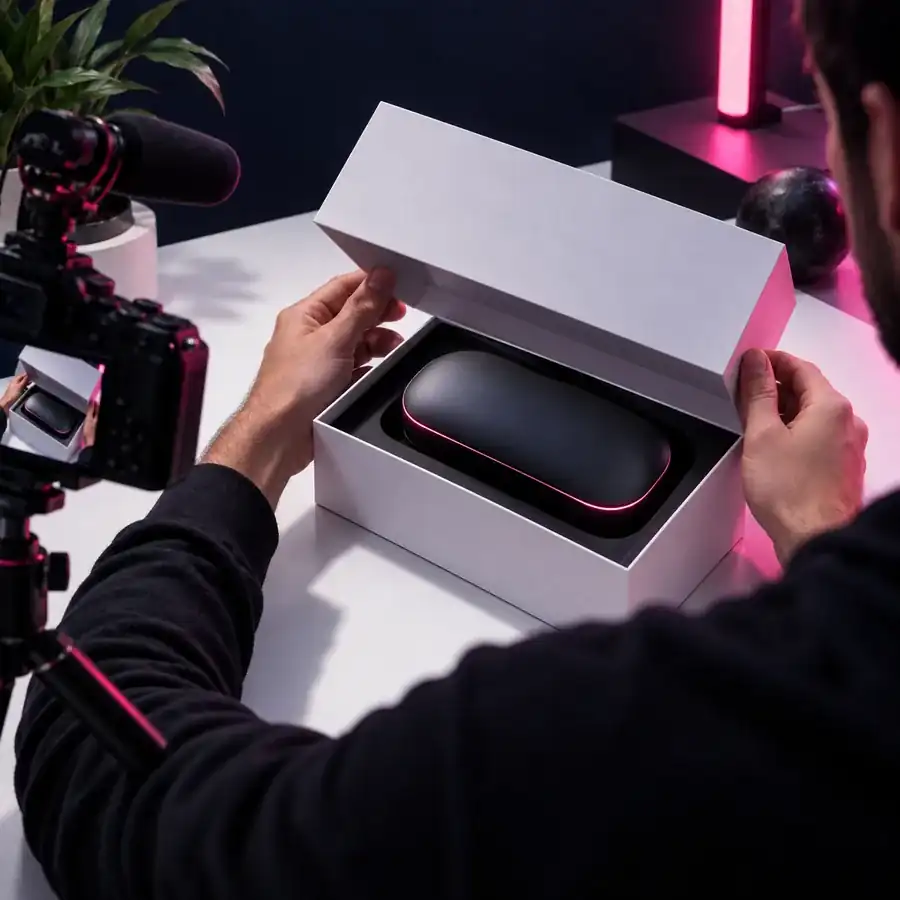
The brand social lead

A social team needs fresh product demonstrations without losing its visual identity or relying on vague creator instructions.

Structured prompts and approval checks produce a broader set of native-looking concepts that are easier to test and repurpose.

influencer marketing case study

The agency strategist

An agency must explain why a creator recommendation fits the audience, campaign objective, and available production effort.

A documented workflow gives the account team a concise rationale, a client-ready output, and a defensible measurement plan.

influencer marketing examples

The scenario's pain

These prompt-led outputs show how a vague campaign request can become a usable brief, content direction, or reporting artifact.

prompts.log
  1. 1
    Create three creator brief directions for a gentle skincare launch: one tutorial, one morning routine, and one honest comparison. Keep claims cautious and specific.
    Campaign brief 3 concepts · audience-led
  2. 2
    Turn this product launch into five short-form creator hooks for busy adults. Include the visual opening, spoken line, proof point, and a clear but natural next step.
    Creator hooks 5 hooks · short-form
  3. 3
    Summarize a creator campaign for a client: objective, audience, strongest content pattern, notable risks, next test, and the evidence needed before scaling.
    Campaign summary 6-part readout · client-ready
Creator campaign concept for a skincare product 1 Brief
Influencer content concept for a lifestyle product 2 Content
Campaign performance summary concept 3 Report

Adapt each prompt by changing the audience tension, product proof, creator format, and single metric that defines a useful next test.

3 concrete workflows

Use one workflow for planning, one for production, and one for learning. Each keeps the creator's voice intact while making the campaign easier to manage.

  • Plan
  • Produce
  • Learn
  1. Plan Verified

    Brief the right creator scenario

    Start with the audience problem and the action you want to influence. Match the creator context to that problem, then define the product proof and boundaries before discussing creative polish.

    1. Name the audience tension and campaign objective.
    2. Choose a creator context that makes the product relevant.
    3. Write the proof point, required disclosure, and review boundary.
    4. Request a concept before commissioning a full asset.
    Build a creator brief
  2. Produce Verified

    Turn one idea into testable content

    Give creators a clear opening, message, and proof point without scripting every word. Ask for variations that change one meaningful element, such as the hook, format, or audience concern.

    1. Select one core promise that can be demonstrated.
    2. Create two or three hook variations.
    3. Keep the creator's natural tone and platform format.
    4. Review claims, music, usage rights, and required labels.
    Generate content directions
  3. Learn Verified

    Read the signal before scaling

    A success story is useful only when the team can explain what happened next. Compare content patterns against the original objective, separate attention from action, and record the next controlled test.

    1. Restate the objective and primary success signal.
    2. Group results by creator, format, hook, and audience fit.
    3. Record qualitative comments alongside performance data.
    4. Choose one change for the next test instead of scaling everything.
    Plan the next test

3 concrete workflows

Use this planning slider to turn creator volume into a simple working estimate for briefs, review passes, and briefing time. Adjust the number to fit the scenario you are modeling.

Planned content directions

directions

Review passes

passes

Briefing time

minutes

Example output

A strong success story compares the starting campaign idea with a clearer, more testable version rather than pretending every result came from one perfect post.

Initial influencer campaign concept with broad messaging Refined influencer campaign case study with focused messaging Broad brief Testable brief

Drag the divider to compare a general campaign promise with a version that names the audience, proof, format, and next test.

Broad briefTestable brief

Make the win durable

Compliance notes

Turn a promising campaign into a repeatable system

Use the workflow to document why a creator was selected, what the audience was promised, which disclosures were required, and what evidence supports the next decision. A clear record protects trust while making the next campaign faster to brief and easier to evaluate.

Build my campaign plan
  • Define the objective before choosing the creator.
  • Review claims, disclosures, rights, and platform requirements.
  • Keep one measurable next test after every campaign.

Success story questions

Scenario FAQ

A useful story explains the original problem, the audience and creator choice, the workflow used, and the evidence behind the outcome. It should also show what the team changed or tested next, rather than presenting a result without context.

Start with one defined objective and document the brief, creator fit, content format, review process, and primary signal before launch. Afterward, compare the result with the objective and record one specific next test.

No. Depending on the campaign, a meaningful outcome may include qualified traffic, product education, content reuse, audience feedback, or stronger consideration. The important point is to connect the chosen signal to the original business or communication goal.

There is no universal number because the right scope depends on the audience, format, budget, and review capacity. A smaller test with a clear hypothesis can produce more useful learning than a large campaign with inconsistent briefs and no comparison point.

Include the disclosure approach, claim review, usage rights, approval boundaries, and any platform-specific requirements that affected the work. Avoid implying guaranteed outcomes, and separate reported observations from assumptions or forecasts.

Start exploring
Start exploring