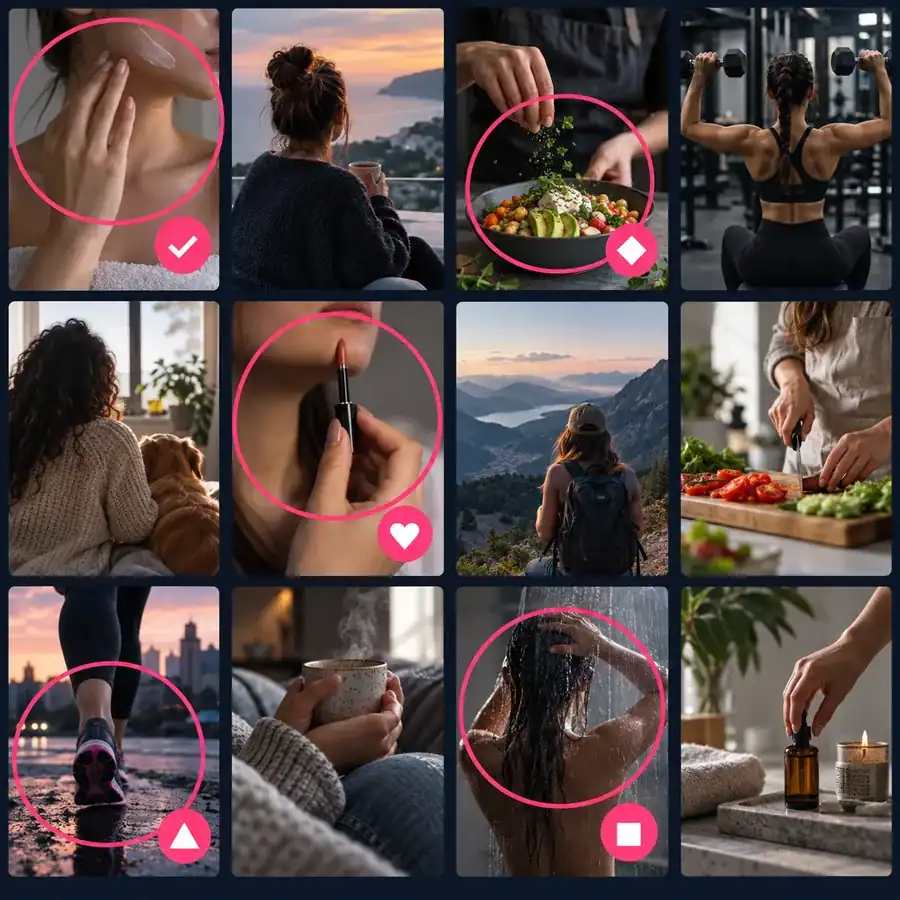
An influencer strategy template turns scattered campaign ideas into a practical plan. Map your audience, creator criteria, content, distribution, and measurement before outreach begins.
A reusable template gives you structure for a specific campaign. A broader influencer marketing strategy explains the full discipline, while this page helps you put the working parts in order.
Unstructured brief
Usable campaign plan
Start narrow, then expand when the campaign needs it.
Core functions
The 3 things only it does
The template is intentionally practical: it helps you make decisions, assign work, and create a measurement loop without replacing strategic judgment.
1
Turn goals into choices
Translate an objective such as awareness, launches, or sales into audience, platform, creator, content, and call-to-action decisions.
2
Make the work assignable
Give each campaign stage an owner, a deadline, a deliverable, and a review point so the plan can move beyond a shared document.
3
Create a measurement loop
Pair each activity with a success signal, from qualified reach and saves to clicks, conversions, or useful audience feedback.
Practical starting points
How to start
Choose the version of the plan that matches your role, then adapt the same fields to the campaign, audience, and creator relationships in front of you.
Small brand owner
Use an influencer strategy template to define one audience, one campaign goal, and a manageable creator shortlist before sending outreach.
You get a focused test with clear learning goals instead of a broad campaign that is difficult to evaluate.
A template gives your influencer marketing team a reliable frame, but it cannot decide what is credible for every audience or guarantee campaign performance.
Creator fit
01
It organizes judgment; it does not replace it
Use the structure to compare creators, but assess audience relevance, tone, past partnerships, comment quality, and the credibility of the recommendation yourself.
Check fit beyond follower count
Review recent content and audience signals
Record the reason for each selection
Creative direction
02
It clarifies content without flattening it
A strong influencer marketing brief sets the goal, required message, format, disclosure, timing, and review rules while leaving room for the creator’s natural voice.
Define the non-negotiables
Leave space for native storytelling
Agree on revision and approval steps
Measurement
03
It measures outcomes, not just activity
A completed plan should separate delivery metrics from business signals. Reach and views describe distribution; clicks, leads, sales, or qualified responses show whether the campaign mattered.
Set a baseline before launch
Name the primary success signal
Document lessons for the next campaign
Side-by-side view
The template fields at a glance
Use the left column as your planning prompt and the right column as the standard for a decision that can be reviewed later.
Planning prompt
Useful answer
Campaign goal
Planning prompt
What should change because this campaign exists?
Useful answer
One primary outcome, stated in observable terms.
Audience
Planning prompt
Who needs to notice, trust, or act?
Useful answer
A defined audience with a relevant need or behavior.
Creator fit
Planning prompt
Why is this creator credible for the audience?
Useful answer
Evidence of topic, tone, audience quality, and brand alignment.
Content plan
Planning prompt
What will be made, where, and when?
Useful answer
Formats, key messages, publishing dates, and approval owners.
Partnership terms
Planning prompt
What does each party provide and receive?
Useful answer
Deliverables, compensation, usage rights, disclosure, and deadlines.
Measurement
Planning prompt
How will the team know what worked?
Useful answer
A primary metric, supporting signals, tracking method, and review date.
Learning loop
Planning prompt
What will change next time?
Useful answer
A short record of results, audience response, and recommended action.
Make the next move
Start with a plan your team can actually use
A useful influencer marketing plan is specific enough to guide action and flexible enough to improve after each campaign. Put the objective, audience, creator fit, content, terms, and measurement in one place, then begin with the smallest credible test.
It is a reusable planning framework for defining an influencer marketing campaign. It commonly covers the objective, audience, creator selection, content, partnership terms, timeline, and measurement.
Start with one clear campaign objective and describe the audience you need to reach. Then complete the creator, content, approval, publishing, and measurement fields before contacting partners.
Include goals, audience, creator-fit criteria, deliverables, key messages, disclosure requirements, usage rights, deadlines, owners, tracking methods, and a review date. Add brand-safety or approval fields when the campaign requires them.
No. A template provides structure for execution, while a broader influencer marketing strategy connects campaigns to the brand’s positioning, channel mix, budget, and longer-term goals. Use the template as a practical starting point, not as a substitute for judgment.